
2026 Worker Exposure Survey: Two in Three Australian Workers Exposed to Workplace Hazards
WHS News · Research
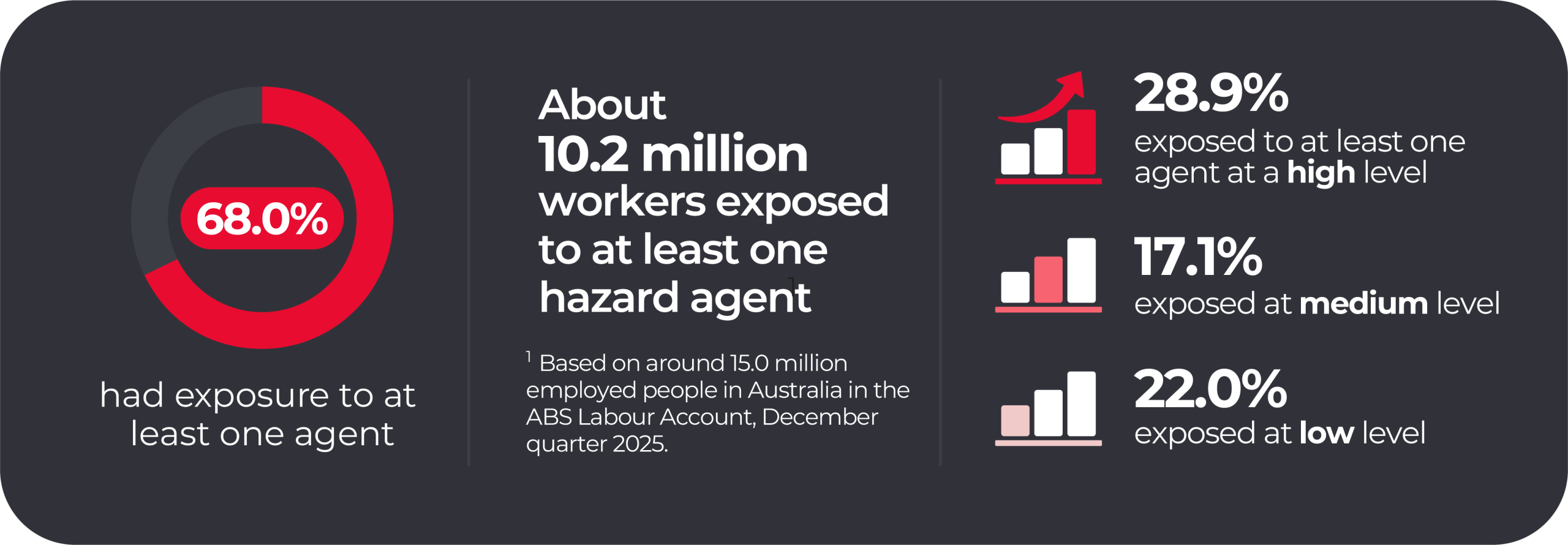
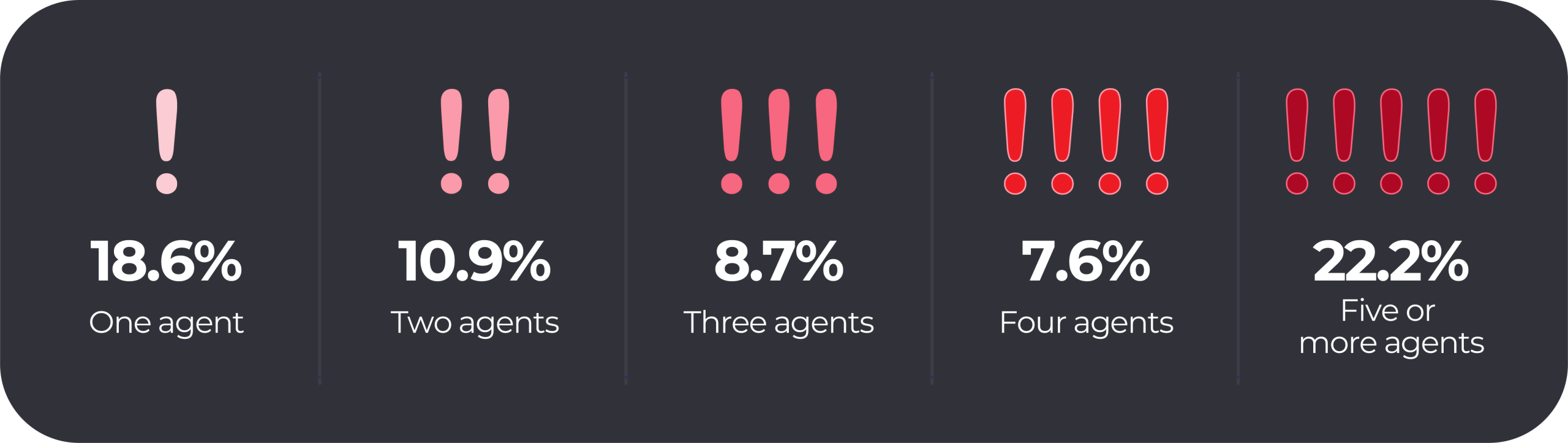
Around 10.2 million Australians are exposed to at least one physical or chemical hazard at work, and more than one in five face five or more hazards at once, according to new national data from Safe Work Australia.
Key takeaways
- 68% of workers (about 10.2 million) are exposed to at least one hazard agent, and 28.9% to at least one at a high level.
- Solar UV, heat and diesel exhaust are the most widespread exposures.
- Construction, agriculture and mining have the highest rates of multiple exposures.
- Apprentices and trainees face higher exposure to heat, silica, lead and asbestos.
68%
of workers exposed to at least one hazard agent
4.87M
workers likely exposed to solar UV
22.2%
of workers exposed to five or more hazard agents
A national snapshot of workplace hazards
Safe Work Australia has released the findings of the 2026 Australian Worker Exposure Survey (AWES 2026), the most current national picture of the hazards Australians encounter on the job. More than 6,600 workers aged 15 and over took part between December 2025 and February 2026, answering questions online or by phone about the tasks they perform and the controls they use.
Workers are rarely able to judge their own exposure levels, so researchers did not ask them to. Instead, task information was run through the Occupational Integrated Database Exposure Assessment System (OccIDEAS), which uses rules developed by occupational hygienists and epidemiologists to produce consistent, evidence-based exposure estimates. Psychosocial hazards were measured through workers’ own reported experiences, aligned with the model Code of Practice: Managing psychosocial hazards at work.
The headline result: 68% of workers had likely exposure to at least one hazard agent, and 28.9% were exposed to at least one agent at a high level.
Construction, agriculture and mining carry the heaviest load
Exposure is not spread evenly across the workforce. The industries with the highest share of workers exposed to five or more hazard agents were:
- Construction: 68.2%
- Agriculture, forestry and fishing: 60.1%
- Mining: 60.0%
By occupation the figures climb higher still: 82.1% of construction trades workers, 81.4% of construction and mining labourers and 74.6% of farm, forestry and garden workers had five or more exposures. Hazard exposure was also more common among younger workers, men, people working outside capital cities, workers in more disadvantaged areas, and those holding diploma or certificate-level qualifications.
The hazards affecting the most workers
The survey highlights a group of high-risk agents because of their health impacts and how heavily exposure is concentrated in certain industries and roles.
| Hazard | Workers exposed | Where exposure is concentrated |
|---|---|---|
| Solar UV | 32.4% (about 4.87 million) | Agriculture, forestry & fishing (74.8%); construction (67.5%) |
| Heat at work | 29.9% (about 4.49 million) | Mining (64.3%); skilled animal, agricultural & horticultural workers (70.9%) |
| Diesel engine exhaust | 26.3% (about 3.95 million) | Agriculture, forestry & fishing (72.8%); mining (71.5%) |
| Silica | 13.6% (about 2.04 million) | Construction (71.8%); mining (63.8%) |
| Lead | 3.8% (about 571,000) | Construction (19.9%); construction trades workers (38.9%) |
| Welding fumes | 3.7% (about 556,000) | Manufacturing (13.9%); automotive & engineering trades (43.3%) |
| Asbestos | 2.6% (about 391,000) | Mining (22.1%); machine & stationary plant operators (19.6%) |
Exposures rarely arrive on their own. More than 90% of workers exposed to solar UV are also exposed to UV through their eyes, and around two in three of those working in heat are also exposed to solar UV.
Apprentices and trainees need closer attention
Apprentices and trainees were more likely than other workers to be exposed to many hazards, including:
- Heat at work: 51.1%
- Silica: 35.7%
- Lead: 17.0%
- Asbestos: 13.7%
Combine that with the finding that one in ten workers (12.3%) said it would often or always be difficult to get help while working, and the case for strong supervision, induction and mentoring of new and young workers is clear.
Knowing which hazards your people face is only the first step. Controlling them, and checking those controls actually work, is what keeps workers safe.
Paragon WHS
Psychosocial hazards: high pressure, strong support
Tight deadlines and time pressure were reported most often in financial and insurance services (47.2%), professional, scientific and technical services (46.3%), and electricity, gas, water and waste services (45.0%).
There were encouraging signs too. Most workers (94.4%) said they are clear about their duties and 84.0% said they receive support to work safely. Around seven in ten felt they have a say in how and when their work is done, are kept informed about changes, and that people in their organisation are treated fairly.
What this means for your workplace
- Review your hazard register against the survey’s priority agents, particularly silica, solar UV, heat, diesel exhaust, lead and asbestos.
- Apply the hierarchy of control. Eliminate or substitute first, then use engineering and administrative controls, with PPE as the last line of defence.
- Check your health monitoring obligations for workers exposed to hazards such as respirable crystalline silica and lead.
- Give apprentices, trainees and new starters extra support: close supervision, a thorough induction and a clear way to ask for help.
- Manage psychosocial hazards like any other risk. Identify, assess, control and review issues such as unrealistic deadlines.
- Consult your Health and Safety Representatives. They are often the first to know where exposure is really happening.
Source: Safe Work Australia, 2026 Australian Worker Exposure Survey findings released (September 2026). Read the full survey insights and analytical report on the Safe Work Australia data website.
Build your team’s hazard capability
Paragon WHS delivers HSR training and practical WHS short courses that help your people identify hazards, consult effectively and put the right controls in place.

Need expert Training?
We can help you ensure you’re fully compliant.