
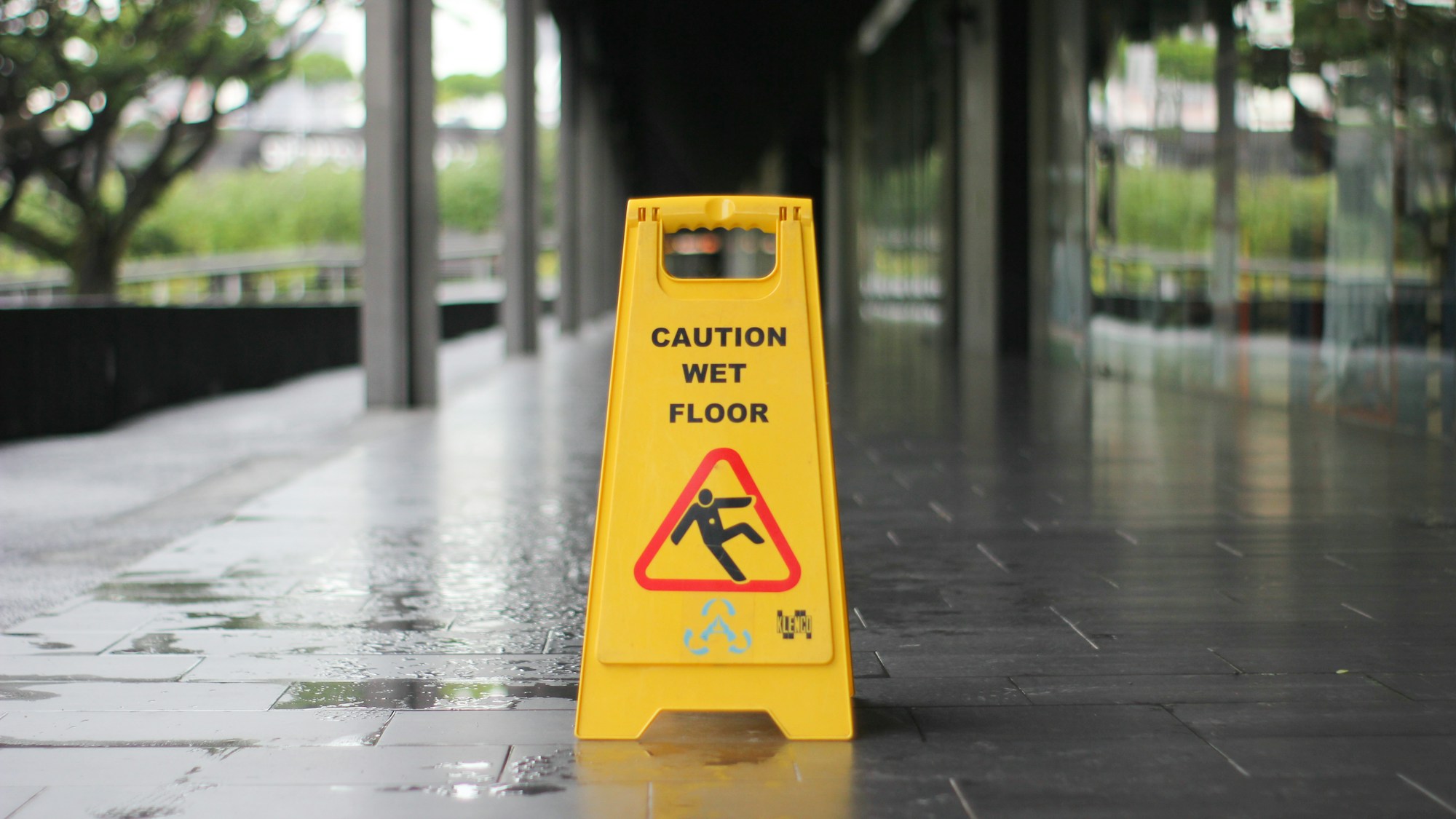
New National Guide Targets Slips, Trips and Falls in the Workplace
WHS News · Guidance
Slips, trips and falls led to 32,000 serious workers’ compensation claims in 2024–25. A new national guide from Safe Work Australia sets out practical ways to find and control these hazards, from floors and lighting to time pressure and fatigue.
Key takeaways
- Covers slips, trips and falls from a height of 2 metres or less, for all duty holders.
- Always aim to eliminate the risk first. PPE is the last line of defence.
- Walkways, corridors and stairs need at least 100 lux of lighting where reasonably practicable.
- Time pressure and fatigue are recognised contributors, not just wet floors.
- Includes a ready-to-use workplace hazard checklist.
32,000
serious workers’ compensation claims from slips, trips and falls in 2024–25
2 m
the guide covers falls from a height of 2 metres or less
100 lux
minimum lighting for corridors, walkways, staircases and lifts
A practical guide for every workplace
Slips, trips and falls can happen in almost any workplace, indoors or out, and they can cause serious injuries and deaths. Released in September 2026, Safe Work Australia’s new Guide to managing the risks of slips, trips and falls is designed as an easy-to-use resource that works across a wide range of industries.
The guide is for all duty holders: businesses (PCBUs), people who manage or control a workplace or how work is done (such as a foreman or lead hand), designers, manufacturers, suppliers and installers, and company officers. Workers and visitors have duties too, including taking reasonable care for their own safety. Throughout the guide, “must” marks a legal requirement and “should” marks a recommended course of action.
| Term | What it means |
|---|---|
| Slip | A person’s foot loses traction with the ground, leading to loss of balance. |
| Trip | A person unexpectedly catches their foot on an object or surface. |
| Fall | A person descends to the ground or a lower level without control, including from small heights such as a stair or kerb. |
Falls from more than 2 metres are not covered, as they are treated differently under WHS laws depending on the jurisdiction and industry.
Start with the hierarchy of control
Duty holders must always aim to eliminate the risk. If that is not reasonably practicable, they must minimise it by working down the hierarchy of control, from the most effective measures to the least:
| Control level | Slips, trips and falls example |
|---|---|
| 1. Elimination | Design a workplace on a single level so there are no stairs to fall down. |
| 2. Substitution | Replace slippery flooring with a slip-resistant surface. |
| 3. Isolation | Cordon off a slippery surface so people cannot walk on it. |
| 4. Engineering | Mark step edges with a high-contrast, slip-resistant strip. |
| 5. Administrative | Schedule housekeeping, set clear clean-up policies and train workers. |
| 6. PPE | Provide slip-resistant footwear that fits properly and is replaced when the tread wears down. |
The guide stresses that the best time to control these risks is before work starts. Good work design lets you “design out” hazards and “design in” controls, by thinking about the type of work, the physical environment, systems and processes, and what workers need and can do.
Key hazard areas and how to control them
| Hazard area | Practical controls |
|---|---|
| Floors and surfaces | Keep floors even and level, use ramps rather than steps, choose slip-resistant flooring for wet areas, secure mats and carpets, and put drains and grates close to liquid sources. Monitor slip resistance and use cleaning methods that don’t leave slippery residue. |
| Outdoor and extreme environments | Maintain designated paths, fix drainage where water pools, light areas used after dark, trim vegetation and schedule sprinklers outside busy times. In cold rooms, kitchens and laundries, add handrails, control humidity and fix leaks quickly. |
| Ramps and stairs | Meet the National Construction Code and Australian Standards, keep slopes and step sizes consistent, use contrasting colours on edges, and fit handrails that extend onto flat ground. |
| Lighting | Provide at least 100 lux in walkways, corridors, staircases and lifts so far as reasonably practicable, avoid sudden changes between bright and dark areas, control glare, and replace failing bulbs promptly. |
| Furniture | Keep furniture stable, use anti-slip pads and braked castors on hard floors, close drawers, and keep walkways and exits clear. |
| Ladders | Train workers before use, inspect ladders each time, use a load rating of at least 120 kg (AS 1892.1), keep three points of contact, allow only one person at a time and never straddle the ladder. |
On ladders, the guide is clear that they are not safe to use without additional fall protection near an open edge or railing, where the worker must overreach, or when using two-handed tools that need high leverage.
Time pressure and fatigue: the hidden contributors
One of the guide’s most important messages is that slips, trips and falls are not only about wet floors and loose cables. How work is organised matters too. Time pressure, when there is not enough time to do the work, can push workers to rush and cut corners. It also increases fatigue, which reduces a person’s ability to spot hazards, judge distance and keep their balance.
Effectively controlling time pressure is not just about having enough time to complete the work, it is having enough time to complete the work safely.
Safe Work Australia, Guide to managing the risks of slips, trips and falls
Controls include realistic deadlines and quotas, staffing that matches the workload, enough breaks during and between shifts, minimising long, irregular or night shifts, providing equipment such as trolleys for loads, and mixing fast and slow-paced work.
Case study: a rainy-day ramp
A restaurant worker pushing a food cart up an outdoor ramp briefly lost traction in the rain. The ramp had handrails and no one was hurt, but the near miss was reported straight away. The ramp was cordoned off with wet-floor signs until the rain cleared, then given a slip-resistant coating, and the gutters and grates were assessed for drainage. The ramp is now checked whenever rain is forecast and is part of regular safety inspections.
Report, notify and review
Workers and others must know exactly who to contact to report a slip, trip or fall risk or incident, and preventative reporting should be encouraged. For example, report a leaking tap before a puddle forms. Some incidents must be notified to the WHS regulator, including serious falls, which have no height threshold, and serious injuries.
Controls should be reviewed regularly and also after an incident or near miss, when a hazard is reported, when layout, flooring, equipment or tasks change, after extreme weather, when workers say controls aren’t working, or when a Health and Safety Representative asks.
Your slips, trips and falls action plan
- Walk the site with the checklist. Use the guide’s checklist to inspect indoor floors, outdoor areas, stairs, lighting, housekeeping and work tasks.
- Consult your workers and HSRs. Ask about near misses and the slippery or poorly lit spots they deal with every day.
- Fix the physical hazards first. Prioritise flooring, drainage, lighting and handrails over signs and reminders.
- Check footwear and ladders. Make sure PPE fits and grips, and ladders are rated, inspected and used correctly.
- Review workloads and rosters. Look for time pressure and fatigue that could be setting people up to rush.
- Set review triggers and keep records. Keep completed checklists so you can track whether controls are working over time.
Source: © Commonwealth of Australia. Adapted from Safe Work Australia, Guide to managing the risks of slips, trips and falls (September 2026), licensed under CC BY 4.0, and New guide to managing the risks of slips, trips and falls (29 September 2026). Featured photo: T.H. Chia on Unsplash.
Build a safer workplace from the ground up
Paragon WHS delivers practical WHS training that helps your team spot hazards early and put the right controls in place, from WHS awareness to HSR training.

Need expert Training?
We can help you ensure you’re fully compliant.