
EPA warns against using black stretch wrap on DG pallets
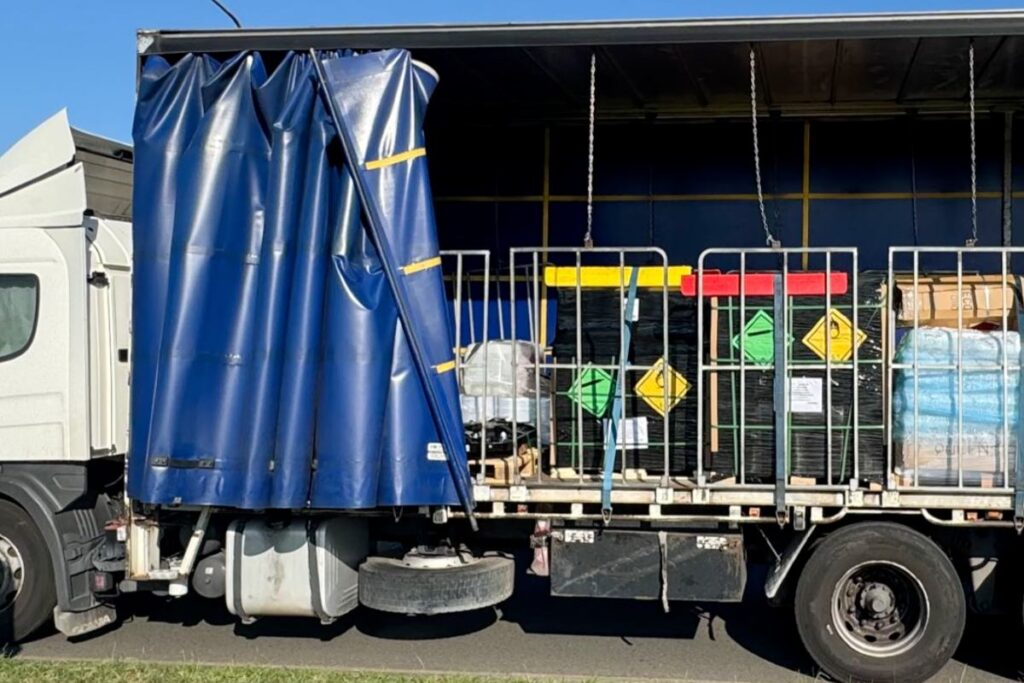
The NSW Environment Protection Authority (EPA) has issued a warning to the road freight industry over the use of black plastic stretch wrap to obscure the contents of dangerous goods (DG) pallets.
In a fact sheet released this month in conjunction with Road Freight NSW, the EPA said it had been advised that some companies are using black stretch wrap in a way that prevents the contents of DG pallets from being clearly identified, creating unacceptable risks during transport and handling.
Under the Australian Dangerous Goods (ADG) Code, a pallet of packaged dangerous goods wrapped in stretch wrap is considered an “overpack”.
Where labels and markings on individual packages are not visible, the overpack itself must be clearly marked and labelled with the proper shipping name, UN number and any other marks required under Chapter 5.2 of the ADG Code for each dangerous goods item contained within it.
The EPA said obscuring labels with black wrap can undermine compliance with these requirements and increase the likelihood of incompatible DG being transported or stored together.
This is of particular concern in the pool chemicals sector, where multiple substances may be present on a single pallet. Examples highlighted by the EPA include sodium hypochlorite (pool chlorine), hydrochloric acid (pool acid) and calcium hypochlorite.
While sodium hypochlorite and hydrochloric acid are both classified as Class 8 corrosives, they are chemically incompatible with each other.
Calcium hypochlorite, meanwhile, is classified as Class 5.1 and is incompatible with corrosive substances. The EPA warned that incompatible classes must not be transported together in placard loads, nor placed together within the same overpack.
Failure to clearly identify the contents of pallets can therefore increase the risk of improper segregation, with potentially serious consequences for drivers, warehouse staff and emergency responders.
The EPA has encouraged anyone who suspects consignors are dispatching dangerous goods without correct labelling or segregation to report the matter to the Environment Line (ph 131 555) for investigation.
Colour-coded containers create confusion
In a separate fact sheet, the EPA also addressed confusion surrounding the use of colour-coded containers for pool chemicals, stressing that while the practice is common across the industry, it is not a regulatory requirement in NSW
Traditionally in Sydney markets, pool chlorine has been packed in light blue 15-litre containers, while pool acid has been stored in black containers.
However, recent supply shortages have seen some pool businesses in northern NSW source chlorine from Queensland, where it is commonly packaged in black containers.
The EPA said this has introduced handling risks in Sydney markets, where colour has historically been relied upon as a visual cue, increasing the potential for confusion and improper segregation.
Both the EPA and SafeWork NSW have confirmed there is no mandated standard or regulation stipulating specific container colours for pool chemicals. Despite this, the EPA warned that relying on colour alone can be dangerous, particularly where products move between jurisdictions or are handled by workers unfamiliar with local industry practices.
The fact sheet highlights the risk that a re-packer or handler who is unaware of colour-coding conventions could inadvertently mix incompatible chemicals. If chlorine and acid are improperly packed together, chlorine gas may be released – a highly toxic substance that poses serious risks to workers and the environment.
Clear labelling and handling systems essential
Across both warnings, the EPA has emphasised that clear labelling and robust handling systems are critical to managing DG safely, regardless of packaging colour or wrapping practices.
Industry members are being urged to ensure all chemical containers are clearly labelled, even where colour-coding is used, and to implement strict handling protocols to prevent accidental mixing of incompatible substances.
The EPA has also encouraged transport operators and other industry participants to report concerns about unsafe transport practices, including obscured labels or poor segregation, to the Environment Line, ph 131 555, for further investigation.
For additional details on segregation and placard load requirements click here.
With the help of emergency services and the transport industry, EPA NSW has developed a series of 10 short videos that explain key safety precautions that must be taken when transporting dangerous goods, and why these precautions are important.