
Call grows for Australia’s first heavy vehicle driver trainers’ hub
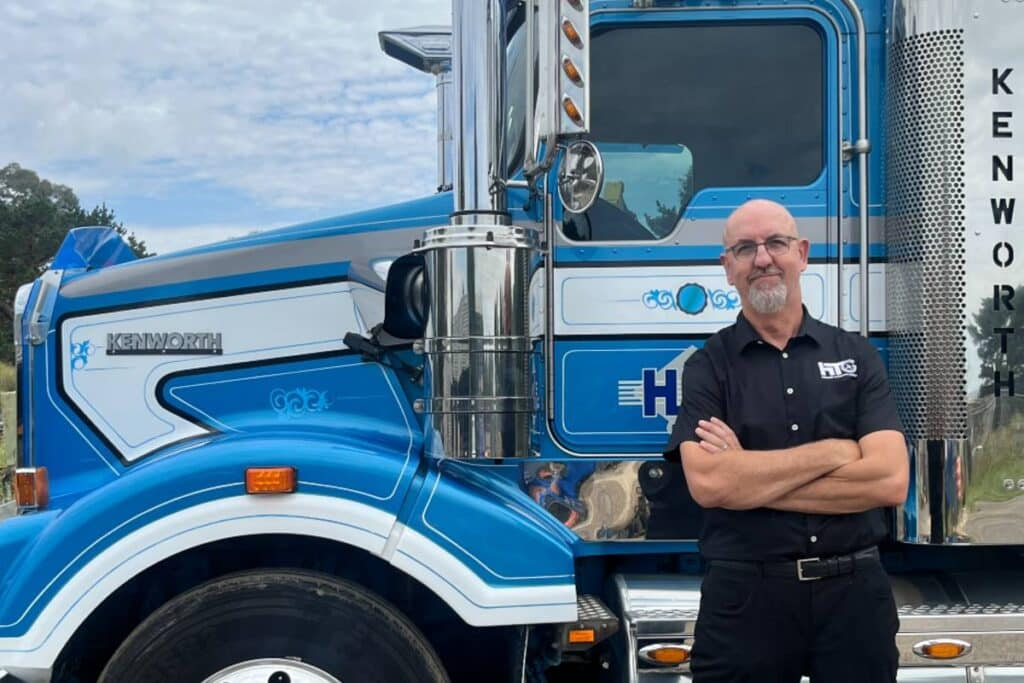
Veteran heavy vehicle trainer Andy Hughes is campaigning to launch Australia’s first dedicated driver trainer support hub to help build a safer, more consistent road-safety culture across the industry.
Hughes is adamant the timing for support has never been more vital with trainers now operating in the middle of rapid, overlapping changes, including new Austroads standards, updated licencing units, Heavy Vehicle National Law (HVNL) reform and evolving fatigue laws.
“Trainers face diverse learner needs, rising assessment complexity and increased public scrutiny, yet they are expected to keep up without structured national support,” Hughes said.
“Unlike other high-risk industries such as aviation and mining, road transport does not have a dedicated national framework to support, develop or professionally recognise its trainers.
“A Trainer Support Hub would fill this gap by bringing together trainers, operators, industry bodies, regulators, and researchers, providing access to professional development, technical updates, safety guidance and policy information – lifting consistency and capability across the sector.”
Hughes, who runs Queanbeyan-based Hughes Training Group, said the idea was first sparked by the Humboldt Broncos bus crash tragedy in Canada in 2018.
“A guy who’d been driving for three months, didn’t know what he was doing and ran a stop sign and killed 16 teenagers and it changed the way they do training over there.
“It’s called mandatory entry level training, or the MELT system, and just recently 3000 trainers were deregistered in America and hundreds in New Zealand. People are starting to think that this type of training might be an area to look at.”
Hughes is aware of jurisdictions in Australia that have cracked down on trainers at various times, but a lot more should be done to tighten standards.
“It’s not a house-cleaning, it was just the cupboard. There’s a whole house that needs looking at.
Hughes said there’s too much pressure from some RTOs on the good trainers who are just trying to do the right thing.
“The system is run by, owned by, and determined by the level of skill and assessment rigour by RTOs. They’re in charge.
“It’s really hard to find that special person who knows the industry, has heaps of experience behind the wheel and is keen to do the necessary qualifications.
“Those are the people who need our professional suppport.”
Hughes said it’s a totally different dynamic in most other industries. He sat next to an aircraft pilot trainer on a recent flight who was flabbergasted to hear that someone could get a heavy rigid licence in six hours.
“They won’t let anyone even leave the ground until they’re totally confident they know what switch is what.
“Yet we put 64-tonne weapons on the road in the hands of someone who is untrained, ill-skilled and not ready.
“It’s our trainers who are the gatekeepers of that and they need support and they’re not getting it because the pressure is on them to churn.”
Brendan Watson from Watto Driver Training said the profile of new trainers has changed dramatically, and the industry can’t rely on experience alone.
He said trainers increasingly come into the role with limited driving history or no structured pathway, and yet they’re expected to prepare learners for an industry that is more demanding than ever.
“The gap between ‘licence-ready’ and ‘industry-ready’ is real – and trainers shouldn’t be left alone to bridge it,” Watson said
Kattie Risk, founder and Managing Director of Billirrawarra Trucking and Training, also lent her support to Hughes’ proposal.
“It’s beautiful in its simplicity, but it’s also where the real impact lies,” Risk said.
“There is so much focus nationally but the reality is that even the best-designed packages can only ever be as effective as the trainers who deliver them.
“When trainers are working with outdated methods, limited professional development or habitual practices, those programs will never reach their full potential.”
Larry Phillips, chain of responsibility specialist and industry expert, said that a national Trainer Support Hub is not just helpful but necessary under the 2025 HVNL reforms.
With new duties around Safety Management Systems, fit-to-drive expectations, behavioural safety and more consistent verification of competency, Phillips said trainers now carry obligations that simply cannot be met without structured professional development and clear, nationally aligned guidance.
“There’s got to be a regime of ‘this is the training requirement’ and not just something is a shell you can buy on the internet to do a TLIF9 or a TLIF80 course,” Phillips said.
“Are we just costing the industry money with no real benefit? We have to give value back and one of the ways of giving value back is to make sure the people who are providing the training are qualified to do so – and have the experience.”
Buoyed by support from stakeholders right across the transport spectrum, Hughes said he now plans to apply for funding to launch the idea through the Heavy Vehicle Safety Initiative.
At deadline for this issue, the Australian Driver Trainers Association, the sector’s peak body, was also planning to discuss Hughes’ proposal at its final board meeting of 2025.
“It’s something that we all agree on – if we invest on our driver trainers, we’ll have better drivers and safer roads,” Hughes added.